Background
My daughter had just started learning to read. Most phonics apps I tried with her were either too gamified or visually overwhelming — busy screens, reward loops, too much happening at once. For a young child still building focus, that level of stimulation gets in the way of the actual learning.
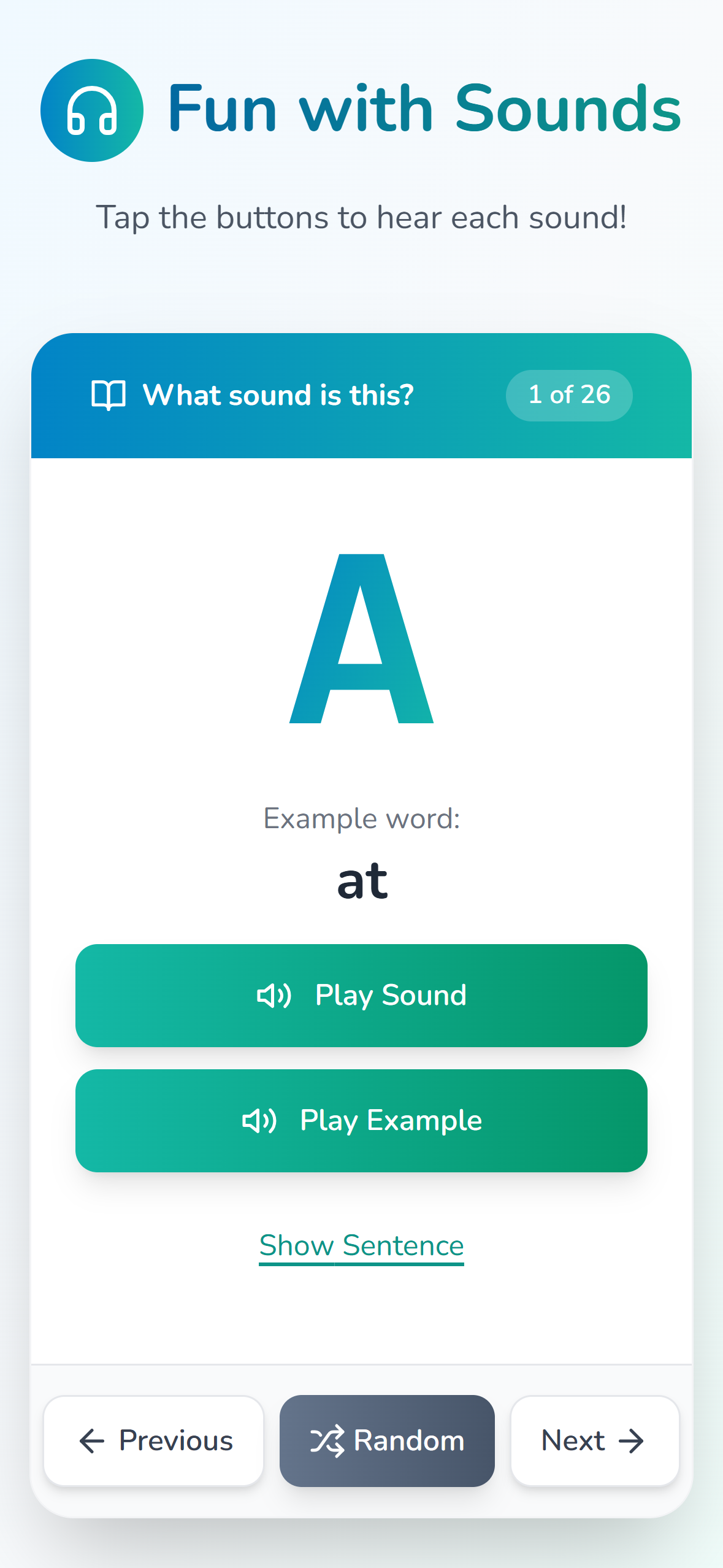
So I built something deliberately simple: low stimulation, one letter at a time, with real audio.
What it does
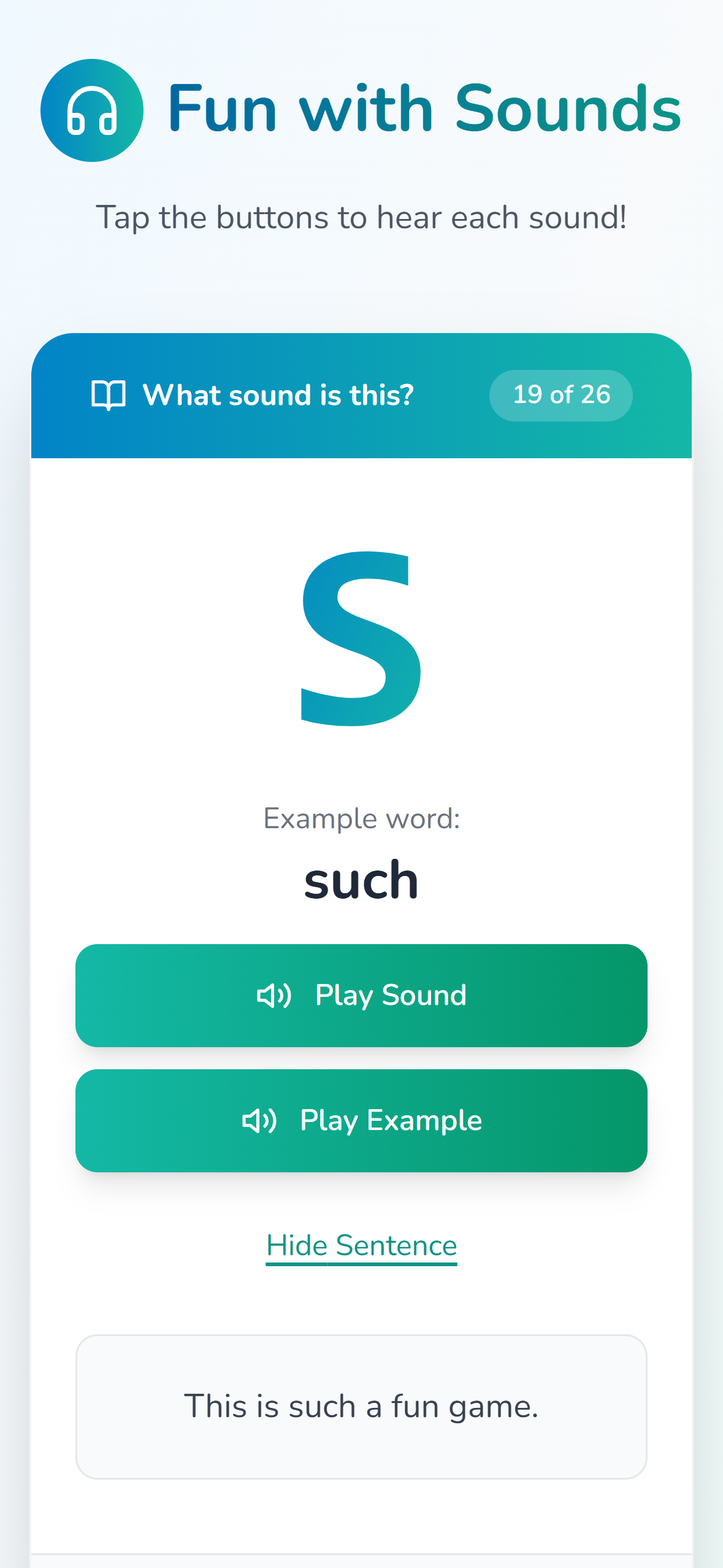
The app covers the basic English phonetic sounds — each letter of the alphabet, in order. For every sound, a child hears the actual phonetic pronunciation paired with a simple, familiar word they'd find interesting. I stripped out animations and points. Each screen is one sound, one letter, one word.
The most useful feedback came from watching, not asking. A child hesitating on an interaction told me more than any parent survey.
What I took from it
Restraint turned out to be the hardest part. I kept wanting to add sounds and motion, and the app got better every time I cut something instead. There's a gap between a child tapping the right button and actually understanding the sound. That's where the design focus was.